
A Year-End Accounting Checklist

Charlotte Van Dyck
As 2024 comes to a close, it’s time for small businesses and entrepreneurs to wrap up their financial tasks to ensure a smooth transition into the new year. A thorough year-end accounting checklist helps you close out the year confidently, stay compliant with tax regulations, and prepare for growth. Here’s a guide to streamline your year-end accounting process—and how a professional accounting firm like Team One Accounting can support you every step of the way.
1. Reconcile All Accounts
Make sure your bank accounts, credit card statements, and loan balances match your accounting records. This ensures your books are accurate and ready for tax filing. We’ll handle your account reconciliations to ensure every transaction is accounted for, saving you a lot of time and stress.

2. Organize Financial Records
Gather all invoices, receipts, and records of income and expenses. Accurate documentation is essential for tax preparation and identifying deductions. We’ll review your financial records, organize them efficiently, and can help you identify overlooked deductions or credits.
3. Review and Update Your Books via an Accounting Software
Go through your financial statements, such as the balance sheet and profit & loss reports to check for errors, unpaid invoices, and miscategorized transactions. As QuickBooks Certified ProAdvisors, we’re experts at cleaning up your books and ensuring everything is accurate and compliant for successful tax filing.
4. Evaluate Your Cash Flow
Examine your cash flow trends to identify periods of strength or struggle throughout the year. Use this data to plan for seasonal fluctuations in the new year. Team One Accounting will analyze your cash flow and help you implement strategies to optimize working capital.
5. Verify Payroll and Employee Records
Confirm that all payroll taxes, employee wages, and contractor payments are properly recorded and reported. You’ll also need to prepare 1099s for contractors, if applicable. We ensure your payroll records are accurate and ready for IRS reporting, so you can avoid costly penalties. We also offer pain-free 1099 filing!
6. Prepare for Tax Filing
Organize all relevant tax documents, including records of business expenses, asset depreciation, and deductions. We’ll work closely with your CPA to handle your year-end tax prep, ensuring compliance and maximizing your deductions.
7. Review Key Financial Metrics
Assess your business’s performance by reviewing key metrics like profitability, gross margins, and year-over-year growth to use these insights to plan for the coming year. Team One Accounting will help you interpret these metrics and develop actionable financial strategies to reach your goals.
8. Close Out the Year in Your Accounting Software
Finalize your year-end entries and close the books to ensure accurate reporting. Our team specializes in QuickBooks Online and will handle year-end software updates to ensure your financials are ready for the new year.
9. Plan for the New Year
Set financial goals, update budgets, and implement strategies for improving cash flow, reducing costs, or expanding operations. We’ll work with you to create a roadmap for financial success, leveraging the insights gained during your year-end review (see our previous Blog!).
Partner with Experts for Year-End Peace of Mind
Closing out your books for the year can be overwhelming, but it doesn’t have to be. At Team One Accounting, we specialize in helping small businesses and entrepreneurs navigate the complexities of year-end accounting. From reconciling accounts to preparing for tax season, our team ensures your financials are accurate, compliant, and ready for the new year.
Let us take the stress out of year-end accounting so you can focus on what matters most—growing your business in 2025. Contact Team One Accounting today to get started!
Related Posts
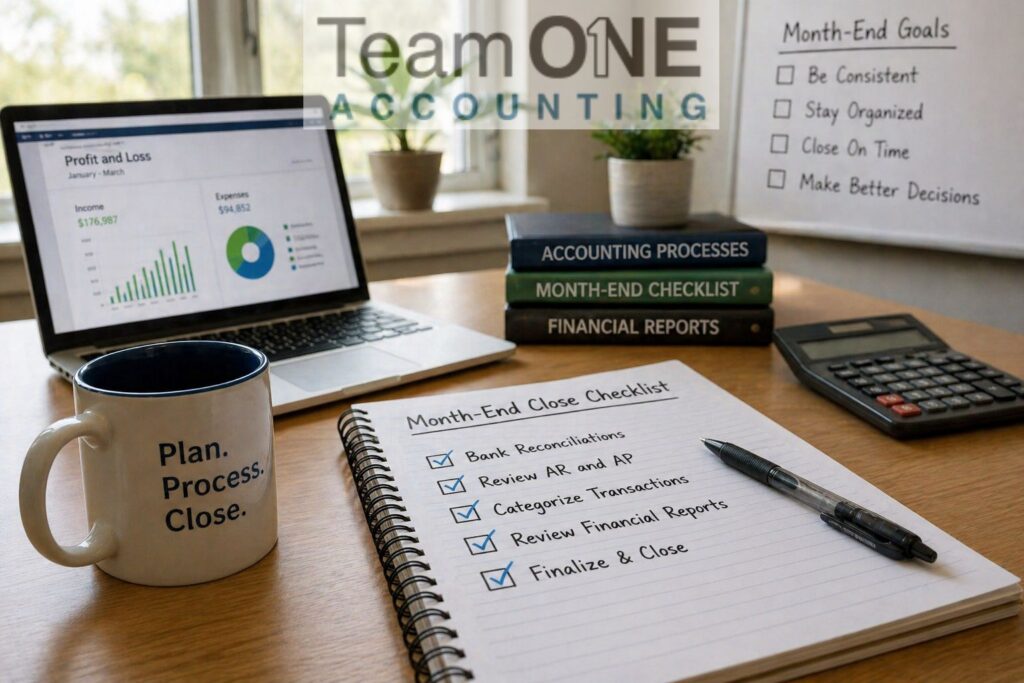
Speeding Up Month-End Close: 5 Steps for a Faster, Smoother Process
Month-end close doesn’t have to feel like a last-minute scramble. For small business owners and accounting professionals, the key to a faster close isn’t working harder. It’s working smarter with consistent systems and clear processes. At Team One Accounting, we help clients turn month-end from a stressful rush into a predictable routine. Here are five…

The Future of Bookkeeping: How AI Is Changing the Game (And Why You Still Need a Human Touch)
Artificial intelligence is transforming nearly every industry and bookkeeping is no exception. From automated transaction categorization to real-time financial insights, AI-powered tools are making accounting faster, more efficient, and more accessible than ever before. For small business owners, this is exciting. Tasks that once took hours can now be completed in minutes. But while AI…

Spring Forward: A Fresh Start for Your Business Finances
When the clocks spring forward, it’s a reminder that change is in the air. The days get longer, energy picks up, and many of us feel motivated to reset and refresh our lives. As a small business owner, Spring is the perfect time to apply that same mindset to your bookkeeping and financial systems. If…